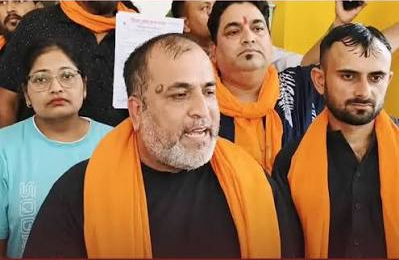
| WR Desk: A Hindu extremist group has demanded an official investigation into one of the world’s most influential Islamic seminaries, claiming that a Hindu temple lies beneath its campus, the latest in a series of efforts by Hindu extremist organizations to challenge the historical legitimacy of Muslim religious sites across India.
According to local reports, the Uttar Pradesh unit of the Hindu Raksha Dal submitted a memorandum to district authorities on Tuesday claiming that Darul Uloom Deoband, a globally renowned Islamic seminary in northern India’s Saharanpur district, was built over a Shiva temple. The group urged officials to investigate the claim within a fixed timeframe.
The demand reflects a broader strategy increasingly employed by Hindu extremist groups, which have filed lawsuits, sought archaeological surveys and organized public campaigns claiming that centuries-old mosques, shrines and other Muslim religious sites were built after the destruction of Hindu temples.
While some disputes are pending before Indian courts, analysts say many such claims rely on contested historical interpretations and have fueled religious polarization.
Darul Uloom Deoband, founded in 1866, is among the world’s oldest and most influential Sunni Islamic seminaries. It has educated generations of Muslim scholars from South Asia, Africa, Europe and other regions, making it one of the most significant centers of Islamic learning outside the Arab world.
Hindu Raksha Dal state president Lalit Sharma claimed his organization possessed evidence supporting its allegation but declined to make it public, saying it would instead be presented before a court. He said the administration should first conduct an inquiry, after which the group could pursue legal action if necessary.
The organization also warned that if authorities failed to investigate, Hindu devotees would travel from the northern city of Haridwar carrying water from the Ganges River to perform jalabhishek — a Hindu ritual in which water is poured over a Shiva deity — at the site it claims is a temple.
Sharma further alleged, without providing evidence, that the property may involve so-called “enemy property,” a legal category in India referring to assets left behind by people who migrated to Pakistan or China after past conflicts.
The claims come as similar campaigns have targeted several prominent Muslim religious sites across India, including the Gyanvapi Mosque in Varanasi, the Shahi Idgah Mosque in Mathura and the Ajmer Sharif Dargah.
|