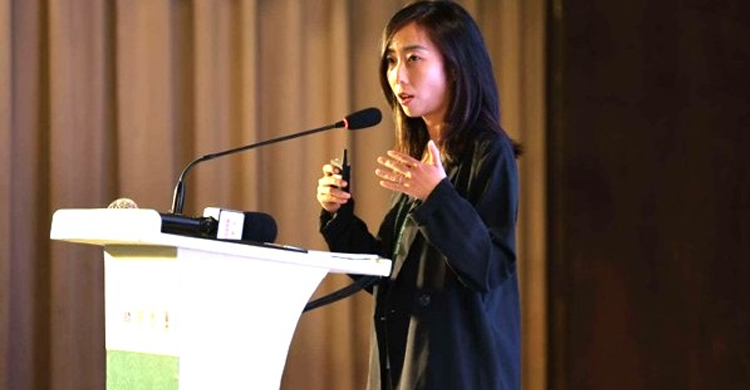
| International : Prominent researcher Dr. Li Qiaoshan has emphasized the need to adopt long-term planning and integrated policies rather than relying solely on temporary measures in efforts to reduce natural disaster risks and carry out reconstruction. He is an associate research fellow at the Institute for Disaster Management and Reconstruction (IDMR), jointly established by Sichuan University and The Hong Kong Polytechnic University.
He made the call on Monday while speaking at the session titled “Disaster Risk Reduction: China-Bangladesh Experience and Cooperation,” the third segment of the “Bangladesh-China Governance Experience Exchange: Second Roundtable,” held in Dhaka, the capital of Bangladesh.
In his remarks, Dr. Li Qiaoshan said, “Disaster management is not merely the final stage of emergency response; rather, it is a continuous process. Policies for rebuilding homes and infrastructure, on the one hand, protect people’s livelihoods and, on the other, determine the risks of future disasters.”
Citing the establishment of coastal buffer zones following the 2004 tsunami in Sri Lanka and the post-Hurricane Katrina situation in New Orleans, United States, in 2005, he said, “Poorly planned resettlement has negative impacts on the social security of local communities and causes ‘gentrification,’ or an artificial surge in the cost of living.”
Drawing on findings from research conducted on the 2008 Sichuan earthquake, he showed that although external reconstruction may appear successful, deep economic inequalities can persist in affected areas over the long term. Even under the same policies, the pace of recovery can vary from one region to another. Citing the example of Bangladesh’s floods in 2020, he said the disaster intensified income, health and food insecurity among low-income people.
Dr. Li Qiaoshan called for the integration of housing, livelihoods and social services in disaster management. Rather than focusing solely on “average progress,” he recommended closely monitoring specific, region-based challenges and adjusting policies according to needs.
Source: Lutfar, Sakib, CMG Bangla.
|