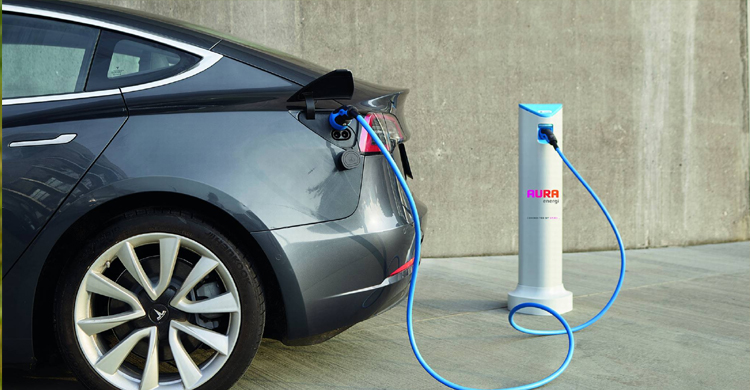
| (BSS) - Electric cars are gaining popularity in the country as consumers show increasing interest in environmentally friendly and cost-effective alternatives.
A series of tariff concessions, strategic policy measures and infrastructure development have encouraged private buyers to turn increasingly towards electric vehicles (EVs).
To accelerate the green transition, develop a sustainable automotive industry and reduce the country`s dependence on imported fossil fuels, the government has revised the tariff structure to encourage environmentally friendly vehicles and discourage the use of polluting, fuel-powered cars.
According to information from the National Board of Revenue (NBR) and the Bangladesh Road Transport Authority (BRTA), electric cars do not have conventional internal combustion engines. Consequently, their import duties are determined on the basis of assessable value, alongside other applicable criteria, rather than engine displacement or cubic capacity (cc).
Under the current tax structure, the total tax incidence (TTI) on imported electric cars priced at up to US$25,000 has been reduced from 93 per cent to 64 per cent. For electric cars priced between US$25,000 and US$50,000, the tax rate has been lowered to 80 per cent. Meanwhile, the tax incidence on plug-in hybrid electric vehicles (PHEVs) with engine capacities of up to 1,800cc has been reduced to 73.44 per cent.
Significant incentives have also been introduced for charging infrastructure. Duties and taxes on imports of electric vehicle chargers and charging station equipment have been reduced to zero to help establish a nationwide fast-charging network.
In contrast, the total tax incidence on conventional fuel-powered cars with engine capacities of 1,200cc to 1,600cc has been increased from 132.36 per cent to 155.88 per cent. This has made electric cars comparatively more attractive to buyers in the domestic market.
Industry experts say electric cars are significantly cheaper to run amid fluctuations in international oil prices and rising petrol and octane prices in Bangladesh. While running a conventional octane-powered car costs around Tk 12 to Tk 15 per kilometre, the cost for an electric car charged at home is only Tk 1.50 to Tk 2.50 per kilometre.
Electric cars also have fewer moving parts than conventional vehicles. They do not have complex internal combustion engines, conventional gearboxes, radiators, pistons or spark plugs. As a result, owners can avoid routine expenses such as changing engine oil, air filters and oil filters every 5,000 kilometres. Although some components, including brake pads and tyres, still require maintenance, the overall cost of routine servicing is generally much lower for electric cars.
In response to growing consumer demand, international brands such as BYD, Changan Deepal, MG, Audi and BMW are selling electric vehicles in Bangladesh through authorised distributors.
According to showroom information, the listed prices of selected models are as follows: BYD Seal 5 Dynamic, Tk 35 lakh; BYD Sealion 5 Essential, Tk 47.90 lakh; BYD Seal 6 Premium PHEV, Tk 52 lakh; BYD Atto 3 Superior, Tk 55.90 lakh; Changan Deepal S05, Tk 49.50 lakh; Changan Deepal S07 SUV, Tk 57 lakh; and MG ZS EV, Tk 40 lakh to Tk 45 lakh.
To boost consumer confidence, importers are offering manufacturer-backed warranties of up to eight years or 150,000 kilometres for high-voltage lithium batteries and electric motors. These warranties are subject to the terms and conditions applicable to individual models.
Regarding vehicle registration, the BRTA has said that number plates are being issued for electric cars under the country`s applicable registration system. Annual tax token and fitness fees for electric cars are reportedly around 30 to 50 per cent lower than those for conventional octane-powered vehicles.
To establish a sustainable market for environmentally friendly vehicles, the government has taken steps to adopt a green procurement policy for public-sector purchases. Under the new policy outlined in the relevant notification, government, semi-government and autonomous bodies will have to ensure that at least 20 to 30 per cent of the new vehicles they purchase are electric.
The initiative is expected to significantly reduce fossil fuel consumption in the public sector and lower the government`s fuel expenditure on administrative operations.
The government has introduced stringent environmental standards to ensure battery safety and durability. The commercial use of harmful lead-acid batteries in passenger vehicles has been prohibited, with the use of internationally compliant lithium-ion or lithium iron phosphate (LFP) batteries made mandatory. LFP batteries can have a service life of 10 to 12 years. Proper maintenance and management of these batteries can also help reduce electronic waste.
Plans have been drawn up to establish electric vehicle battery recycling and disposal centres in designated industrial zones to ensure the safe management of end-of-life batteries. The plan also includes a depot of the Bangladesh Road Transport Corporation (BRTC) in Gazipur.
To address the challenges of charging electric cars in city apartments and multi-storey commercial buildings, housing and urban development authorities have updated building regulations. The Rajdhani Unnayan Kartripakkha (RAJUK) and the Chattogram Development Authority (CDA) have introduced requirements for EV-compatible parking facilities as a condition for approving designs for new buildings.
Under these provisions, buildings must be equipped during construction with designated high-capacity electrical wiring, safety circuit breakers and electrical substation panels. This will allow flat owners to install their own electric vehicle chargers more easily at a later stage.
According to the Ministry of Power, Energy and Mineral Resources, the wholesale electricity price for fast-charging stations has been set at Tk 11.36 per unit. Private operators charge customers Tk 16 to Tk 19 per kilowatt-hour, including service fees. Depending on the vehicle and charging conditions, these stations can charge a battery to 80 per cent in around 30 to 40 minutes.
A typical electric car costs around Tk 300 to Tk 750 to charge fully. Depending on the model, battery capacity and driving conditions, this can provide a range of around 400 kilometres. However, the limited availability of fast-charging stations along highways remains a major challenge. To address this, the government has set a target of establishing 1,200 commercial fast-charging stations across the country by 2030.
According to a joint economic assessment by the Department of Environment and the Power Division, each private electric car on the road prevents an average of 4.6 tonnes of carbon dioxide emissions annually.
Electric cars produce no tailpipe emissions while being driven and generate much less noise than conventional fuel-powered vehicles. Their wider use is therefore expected to help improve air quality and reduce noise pollution in major cities such as Dhaka and Chattogram.
Under the government`s strategic roadmap, the target is to make at least 30 per cent of the country`s total vehicles electric by 2030. Achieving this goal could reduce fuel imports and save substantial amounts of foreign exchange.
|