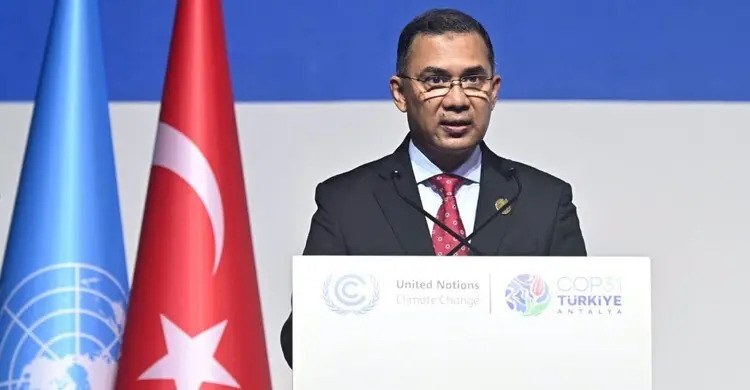
| financing to tackle climate change risks and boost adaptation capacity after being selected among five countries in the first phase of the Climate Investment Funds` (CIF) `ARISE` programme.
The announcement was made at an event held in the Blue Zone of the UN Climate Change Conference (COP31) in Antalya, Turkey, on Thursday (November 12).
Alongside Bangladesh, Haiti, Kyrgyzstan, Morocco, and Sierra Leone were chosen for the first phase, while a joint regional initiative covering Mozambique and Malawi also secured backing. Each selected country will receive $30 million, whereas the regional initiative has been allocated $40 million.
The ARISE programme aims to finance adaptation and resilience-building projects in climate-vulnerable nations, focusing on disaster response, infrastructure protection, and strengthening adaptive capacity in agriculture and other key sectors.
Addressing the event, CIF Chief Executive Officer Tariye Gbadegesin noted that climate change is increasingly impacting lives, livelihoods, and economic prospects worldwide, making increased investment in adaptation urgent. She stated that 40 per cent of the programme`s total funding will be dedicated to the private sector, with investments implemented in partnership with six multilateral development banks.
Highlighting strong global demand, Gbadegesin revealed that 70 countries applied for the programme, with the top 25 applications alone representing a project portfolio worth $700 million ready for immediate investment. She added that financial contributions from Germany, Ireland, and Spain made the rollout of the first phase possible.
In Bangladesh, the funds will be invested in strengthening coastal infrastructure and expanding climate-friendly agriculture. Elsewhere, Haiti and Sierra Leone will prioritise coastal protection and mangrove ecosystem restoration.
Kyrgyzstan will receive support to enhance climate resilience in its water and agriculture sectors, while Morocco`s allocation will target water security, renewable energy-powered desalination systems, and wastewater reuse.
Meanwhile, the joint Mozambique-Malawi initiative seeks to shield economically vital areas from floods, droughts, and cyclones while attracting private sector capital.
|