|
How long does it take for a banana to travel from the orchard to the dining table? When supply chains were inefficient, it took much longer, and often the banana would turn from yellow to black. Drawing on decades of experience in the shipping industry, Teo Siong Seng, Executive Chairman of Singapore’s Pacific International Lines (PIL), used the story of a banana changing color to illustrate the progress he has witnessed in Asia-Pacific connectivity. He noted that today, fresh produce even from countries like Ecuador can be delivered fresh to the tables of many people across the Asia-Pacific region.
At the seminar titled "Charting the Blueprint for Connectivity" during the 2026 APEC CEO Summit, business representatives from the Asia-Pacific region engaged in lively discussions on supply chain resilience, seamless logistics, and cross-border cooperation.
Adopted at the 22nd APEC Economic Leaders` Meeting in 2014, the "APEC Connectivity Blueprint" laid a solid foundation for connectivity to achieve long-term development in the Asia-Pacific region. This year, under China`s initiative, the Connectivity Working Group of the APEC Business Advisory Council (ABAC) was restructured, underscoring that connectivity is the result of collective efforts by all APEC members.
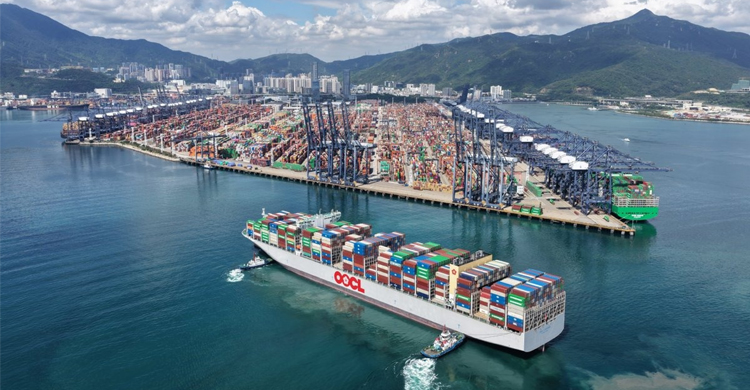
Teo noted that China has become the world`s second-largest economy and is home to six of the world`s top ten container ports, creating even more opportunities for the shipping industry. Carol Tomé, CEO of U.S.-based UPS, stated that the company has established air cargo hubs in seven APEC economies and is continuously strengthening inter-regional logistics connectivity.
The business community is not merely a participant in economic activities, but also a bridge connecting the world. Xi Guohua, Chairman of CITIC Group Corporation, proposed upgrading from simple "financing" to comprehensive empowerment through "intellectual" and "industrial" integration.
Lin Shunjie, Chairman of China International Exhibition Center Group, shared an example where a food company from Zhejiang met a Spanish equipment supplier at a blockchain expo. Starting from exchanging business cards, they went on to jointly build a smart factory and eventually launched a pomelo juice product onto the market.
The significance of interconnectivity lies in benefiting every link and every individual along the industrial chain. Speaking about the cooperation model in the egg industry, Suphachai Chearavanont, CEO of Charoen Pokphand Group, explained that farmers contribute land as part of the partnership while enterprises invest in capital, equipment, and management—which not only provides farmers with a more stable income, but also enhances their ability to withstand risks. He proposed that enterprises from both countries can cooperate to develop deep processing, extend industrial chains, and bring benefits to more farmers and small and medium-sized enterprises.
Participants agreed that connectivity is fundamentally about bringing people together, and that only by embracing one another with mutual trust can the region achieve shared prosperity.
Source: Cai-Alim-Wang Haiman, China Media Group (CMG)
|