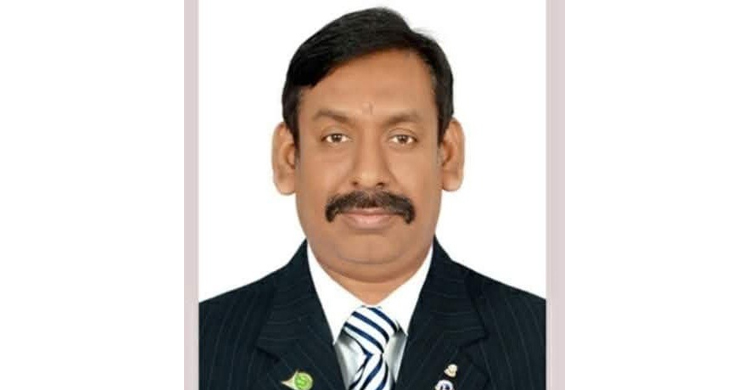
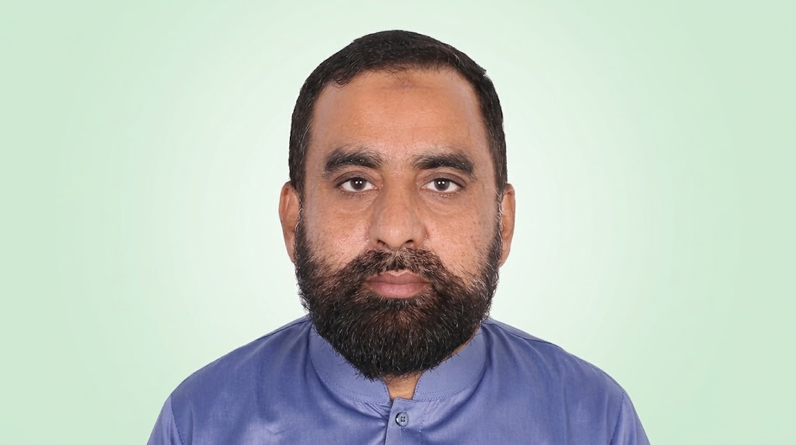
| Md. Mukhlesur Rahman: Bangladesh’s banking sector has long been confronted with a range of challenges and crises. The expansion of non-performing loans, deficiencies in corporate governance, political interference, disputes over ownership, and weak regulatory oversight have repeatedly undermined public confidence in the financial system. Against this backdrop, recent developments surrounding Islami Bank Bangladesh PLC have brought an important question to the forefront: Should a bank be evaluated based on its financial performance and institutional capacity, or through the lens of political and ideological considerations?
The primary strength of any bank lies in the confidence of its depositors. Such trust takes years to build but can be destroyed in a very short time. As one of the largest private commercial banks in the country, Islami Bank Bangladesh is more than just a financial institution; it is deeply connected to millions of depositors, expatriate Bangladeshis, small entrepreneurs, and the rural economy. Consequently, any instability surrounding the bank is not merely an institutional concern but one that has broader implications for the stability of the entire financial sector.
Unfortunately, discussions surrounding Islami Bank in Bangladesh often transcend the boundaries of economics and banking, turning instead into political and ideological debates. Yet the success or failure of a bank should be assessed on the basis of its capital adequacy, governance standards, risk management practices, transparency, depositor protection, and compliance with regulatory requirements. It is neither reasonable to view an institution with the word “Islami” in its name with automatic suspicion, nor acceptable to place it beyond accountability because of that identity.
The growth of Islamic banking in Bangladesh has not been an accidental phenomenon. It has emerged from the demand for financial services aligned with religious values, the steady inflow of remittances, the financing needs of small entrepreneurs, and the desire for alternative banking models. In this regard, Islami Bank Bangladesh has played a pioneering role. Its contributions to remittance mobilization, rural development programs, and investment expansion have become an integral part of the country’s financial history.
At the same time, it is equally true that the Islamic banking sector has suffered at various times from political interference, changes in ownership structures, weak supervision, and activities driven by vested interests. Many of the irregularities, loan scandals, and governance failures discussed in recent years have not stemmed from the fundamental principles of Islamic banking itself; rather, they have been the consequence of institutional weaknesses and political influence.
For this reason, the most urgent priority today is to treat Islamic banking not as a subject of political controversy but as a component of the broader financial sector. What is needed are stronger legal frameworks, independent regulatory oversight, transparent ownership structures, effective Shariah governance, and robust safeguards for depositors’ interests. Whether Islamic or conventional, all banks must be subject to the same standards of governance, transparency, and accountability.
A strong and stable banking system is indispensable for Bangladesh’s economic future. Achieving that goal requires moving beyond the tendency to view banks as political allies or adversaries. Banks should be treated as what they fundamentally are—financial institutions whose success or failure should be measured by professionalism, sound governance, and public trust.
Amid the ongoing debates surrounding Islami Bank, it is important to remember one fundamental truth: when confidence in financial institutions is eroded, it is not only a single bank that suffers—the entire economy bears the consequences. Therefore, discussions about the future of Islami Bank should be guided not by political considerations, but by concerns for financial stability, institutional reform, and the national interest.
Author: Md. Mukhlesur Rahman is an Islamic Economist, Banker, Social Thinker, and Human Rights Activist. He can be reached at mukhles1975@gmail.com
|