| New party seeks public trust with a people-first agenda, moderate Islamic identity and pledges to confront corruption, extortion and unemployment.
MM Rahmatullah: At a time when ordinary Bangladeshis are grappling with the rising cost of living, energy shortages, unemployment, corruption and extortion, a newly formed political platform, People`s Rights Party-PRP is seeking to carve out space in national politics with a promise of “people-centred” governance.
The party says its politics will focus on fundamental rights, justice, accountability, good governance and economic opportunity rather than the pursuit of power for its own sake.
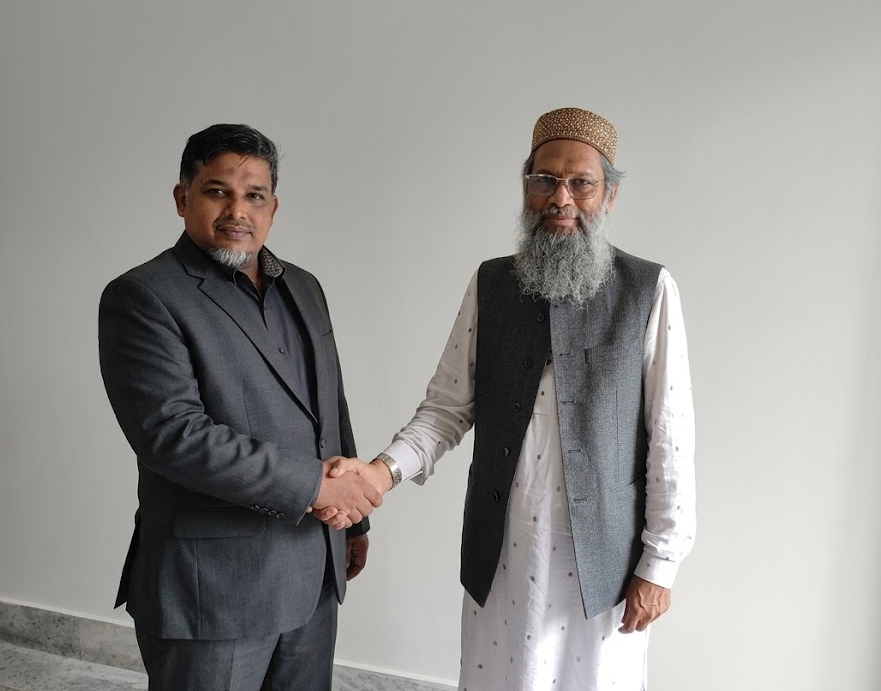
In an exclusive interview, PRP Chairman Sardar Md Abdus Sattar said the party wants to build a Bangladesh where citizens are treated as the “true owners” of the state and where political power is used to serve people rather than political elites.
The party describes itself as a moderate Islamic political force, seeking to combine religious values with democracy, patriotism, social justice and modern state governance.
Its political pitch comes against a backdrop of widespread public concern over household expenses, energy security, job opportunities and the credibility of political institutions.
A new party faces an old question: Can it win public trust?
For PRP, Sattar acknowledges, the first and perhaps biggest test is credibility.
Bangladesh`s political landscape has repeatedly seen new parties emerge with promises of change, only to struggle to build nationwide organisational strength and sustained public confidence.
Sattar says PRP intends to avoid that pattern by making its leaders` conduct the first test of its politics.
He says party activists will be instructed to stay away from corruption, extortion and abuse of power.
“Only speeches or election promises cannot earn people`s trust,” Sattar said. “We have to remain beside the people and demonstrate that our actions match our words.”
Rather than depending primarily on money or influential individuals, the party says it wants to build its organisation around grassroots support.
That, however, will be one of the crucial tests of PRP`s political future.
Religion, citizenship and a moderate political identity
PRP`s political identity is explicitly linked to Islamic values.
Sattar says Islam, in the party`s interpretation, emphasises justice, humanity, trustworthiness, freedom from corruption and protection of people`s rights.
But he also sought to draw a line between religious values and extremism.
The party, he said, rejects violence, intolerance and the denial of other people`s rights in the name of religion.
PRP wants Muslims, Hindus, Buddhists, Christians and followers of other faiths to live with equal security and dignity.
The party`s message therefore attempts to combine a religiously informed political identity with the language of citizenship, constitutional rights, social harmony and the rule of law.
Whether voters will see that as a credible middle path—or demand greater clarity on how those principles would translate into state policy—will likely become an important part of the party`s political test.
The economy begins at the kitchen table
For most families, politics is ultimately judged by the price of food, the availability of electricity and gas, the prospect of employment and the security of daily life.
PRP says its economic priorities will therefore focus on issues directly affecting households and businesses.
On rising commodity prices, Sattar acknowledges that international prices, import costs, transportation expenses, exchange rates and production costs all play a role.
But he says weak market management, corruption, syndicates and extortion can intensify the burden on consumers.
PRP wants stronger market monitoring and greater transparency across the supply chain, along with action against illegal syndicates and extortion.
At the same time, Sattar says the party does not want its activists to act as an alternative law-enforcement force.
Instead, they would collect complaints from citizens and bring them before the relevant state authorities.
That distinction is significant: PRP says political activism should strengthen accountability rather than encourage political groups to take the law into their own hands.
Energy security: domestic gas and renewables
The energy crisis is one of the party`s most prominent policy concerns.
Sattar describes energy security as an issue of national security, arguing that unreliable gas and electricity supplies can disrupt factories, threaten investment and ultimately put millions of jobs at risk.
PRP`s immediate proposals include reducing system losses, stopping illegal connections and waste, improving energy management and prioritising reliable supplies for industrial zones.
For the longer term, the party wants greater exploration for domestic gas and increased investment in renewable energy.
It also wants Bangladesh to reduce excessive dependence on imported fuel.
The party`s stated objective is not simply to increase electricity generation, but to create a stable energy system that supports industry, investment and employment.
“We don`t want factories to close”
For a country with a large young population, energy policy and employment policy are closely connected.
Sattar argues that factories cannot survive without reliable energy, while workers cannot retain jobs if industrial production repeatedly suffers from shortages.
PRP therefore sees energy security as part of a broader employment strategy.
Its proposed formula is straightforward: affordable energy, stable industrial production and new investment should translate into more jobs.
Whether that formula can be converted into a detailed, financially sustainable national energy plan remains a question for the party to answer as it develops its policy platform.
Anti-corruption promise goes beyond slogans
Corruption is another central pillar of PRP`s political message.
Sattar says Bangladesh cannot become corruption-free merely through speeches or campaigns. The state itself must be reformed so that opportunities for corruption are reduced.
The party proposes wider digitisation of government services, greater transparency in public procurement, stronger financial accountability and impartial enforcement of anti-corruption laws.
It also wants merit and competence to play a greater role in public appointments and promotions.
Sattar argues that anti-corruption agencies and institutions must be able to operate independently.
Perhaps more importantly, he says PRP`s own leaders and activists should not be protected if they become involved in corruption or extortion.
That promise could become one of the most important measures by which the party is judged.
What would happen in the first 10 days?
Asked what PRP would do if it came to power, Sattar offered a 10-day starting agenda.
The first priority would be greater transparency in government procurement and tendering.
The party would also seek immediate action against extortion and illegal collection of money, strengthen accountability among public officials and prevent political influence from being used to control businesses, contracts or administrative decisions.
The message is deliberately aimed at one of the most persistent public complaints about politics: that political connections can become a route to economic privilege.
PRP says that must change.
Young people: from job seekers to job creators
Unemployment is perhaps the most politically sensitive issue for Bangladesh`s younger generation.
Sattar says young people should not be treated merely as applicants waiting for government or private-sector jobs.
Instead, he wants policies that help young people become entrepreneurs and employment creators.
PRP proposes expanded technical and vocational education, skills training, freelancing and information-technology programmes, support for small entrepreneurs and industry-oriented training.
The party also wants easier access to finance and business advice for young entrepreneurs.
In the longer term, it proposes closer coordination between educational institutions and industries so that graduates acquire skills demanded by the labour market.
Agriculture, IT, manufacturing, tourism, healthcare and services are identified as potential sources of new employment.
The broader ambition is to move from a culture of waiting for jobs to one in which young people can create economic opportunities for themselves and others.
Local government elections: a test of organisation
Local government elections could provide an early test of PRP`s ability to translate its national message into grassroots politics.
Sattar says the party wants to nominate candidates who are honest, competent, popular and connected to their communities.
That approach could help the party distinguish itself from politics based primarily on organisational muscle or financial influence.
But local elections are also demanding. They require strong networks, credible candidates, election agents, resources and sustained community engagement.
For a new political organisation, the local battlefield may therefore reveal whether its promise of people-oriented politics has genuine grassroots reach.
Alliances—but not merely for power
PRP is not closing the door on political alliances.
Sattar says the party is prepared to work with like-minded political forces when there is agreement on national interests, principles and programmes.
But he rejects alliances formed simply to divide political power.
That position leaves the door open to future cooperation while allowing the party to preserve a distinct political identity.
For a relatively new organisation, that balance may prove important as Bangladesh`s political landscape continues to evolve.
The larger challenge: turning promises into institutions
PRP`s programme is built around issues that resonate strongly with ordinary Bangladeshis: food prices, jobs, energy, corruption, justice and political accountability.
But the difficult part of politics begins after the slogan.
A credible political alternative must ultimately explain how its promises will be financed, implemented and enforced—and how its own leaders will be held accountable when they fail.
Sattar appears conscious of that challenge.
Rather than asking voters to accept promises blindly, he says citizens should examine the party`s work, the behaviour of its leaders and activists, and the substance of its policies before making a judgment.
That may be the most important test facing PRP.
“Politics is for the people”
Sattar`s message to voters is ultimately simple.
He urges citizens not to fear politics and to exercise their democratic rights by choosing honest and capable leaders.
PRP, he says, does not want to see citizens merely as voters who appear at election time. It wants them to be recognised as the people for whom the state exists.
The party`s political vision can be summed up in five themes: people`s rights, a justice-based state, good governance, employment and freedom from corruption.
Whether PRP can turn that vision into a durable political organisation—and persuade a sceptical electorate that its leaders will practise what they preach—will determine whether its promise of a new political path becomes a meaningful force or remains another entry in Bangladesh`s crowded political landscape.
|