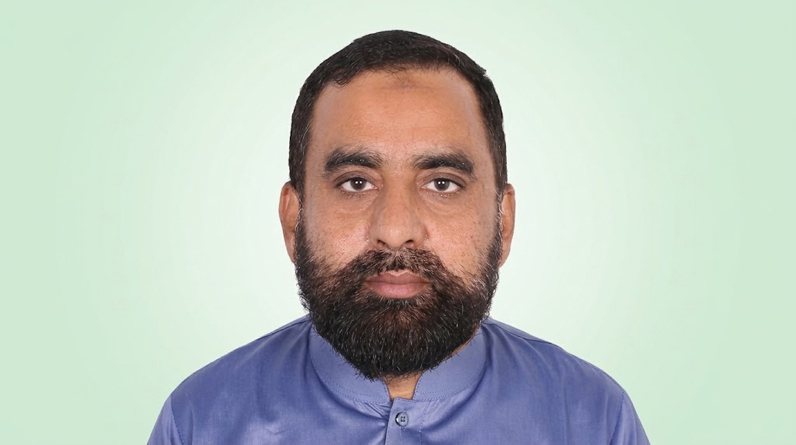
| Lion Md. Gani Miah Babul
Education develops human potential, enhances self-respect and opens the way to a better life. But when a young person remains unemployed for years after completing their education, it is not only their personal dreams that are called into question; the country’s education system, economic planning and development strategy also come under scrutiny. In Bangladesh, unemployment among educated young people is no longer merely a matter of personal frustration. It is a national problem directly connected to economic growth, social stability and the development of future human resources. Thousands of young people complete their education and enter the job market, yet a significant gap remains between their expectations, qualifications and the demands of the labour market. Overcoming this situation will require more than isolated programmes or assurances. It will require evidence-based planning, an economic environment conducive to job creation, and coordinated, accountable action by the government.
According to the Bangladesh Bureau of Statistics (BBS) Labour Force Survey 2024, the country’s overall unemployment rate was 4.48 per cent. But the situation among people with higher education is more concerning. Reports based on the survey data show that the unemployment rate among the highly educated rose to 13.5 per cent in 2024, and the number of unemployed graduates was about 885,000. In 2023, the unemployment rate among the highly educated was 13.11 per cent. This means that the overall unemployment rate alone does not fully explain the employment realities faced by educated young people. It is essential to analyse unemployment by level of education.
Behind every young person are years of financial investment by their family, the sacrifices of their parents and the student’s own hard work. When a young person cannot find a job after completing their studies, their future becomes uncertain and their family also comes under financial pressure. Many families sell land, take out loans or cut back on daily necessities to give their children a higher education. They hope that, after finishing their studies, their children will enter working life, establish themselves and eventually support the family. But when unemployment continues for a long time, that hope turns into disappointment. A young person’s confidence is undermined, the family’s financial burden grows, and feelings of frustration and inequality can deepen in society.
The problem of unemployment cannot be assessed simply by counting the number of jobseekers. We must consider what kinds of jobs the economy is creating, how much new investment is taking place, how well the education system matches labour-market demand, and the quality of existing employment. In a 2024 statement on Bangladesh, the International Labour Organization (ILO) said that about two million young people enter the labour market every year. In the same statement, the organisation noted that employment had not grown sufficiently in relation to economic progress, and that the slowdown in job creation in manufacturing had also affected the services sector. The ILO further reported that, according to the 2022 Labour Force Survey, the unemployment rate among people aged 15 to 29 was 8 per cent, while among those with higher education it was 27.8 per cent. Differences in the time periods and definitions must be taken into account; the 2022 and 2024 figures cannot be treated as if they were the same. However, data from different surveys indicate that employment for young people and the highly educated requires special attention.
A major cause of educated unemployment is the mismatch between the education system and workplace requirements. Many students acquire theoretical knowledge but have limited opportunities to develop the practical skills, technical knowledge, problem-solving abilities, communication skills and teamwork experience needed for real work. As a result, despite holding qualifications, many struggle to demonstrate the skills required in job interviews or at the workplace. Employers, on the other hand, want workers who can begin working quickly after training. Without effective communication between educational institutions and industries, and regular curriculum development, this gap will grow further.
The World Bank’s 2024 Bangladesh development report highlighted the shortage of adequate employment for educated young people, particularly women and urban youth. The report said that job creation had not kept pace with economic growth and that the pace of new job creation in major industries, including the ready-made garment sector, was limited. The World Bank’s analysis also identified the gap between the skills demanded by employers and the qualifications of jobseekers as a significant problem. An ILO working paper published in March 2026 also discussed informal employment, underemployment and the particular challenges faced by young people and women in Bangladesh’s labour market. These analyses make it clear that expanding access to education alone will not reduce educated unemployment; the path from education to productive employment must also be made easier.
A large section of educated young people have career expectations limited to a few specific fields. Their interest in government jobs has reasonable grounds, including job security, social status, a regular salary and retirement benefits. But the number of government posts is limited, so it is not possible to recruit every applicant. Many lose valuable years at the beginning of their working lives preparing for the same types of recruitment examinations. Some do not want to enter other professions, while others cannot find alternative employment because they lack appropriate training, capital or information. The policy objective, therefore, should not be to discourage preparation for government jobs. Rather, it should be to create realistic opportunities for decent private-sector jobs, skills-based professions, entrepreneurship and self-employment.
The government’s first responsibility should be to make job creation a central priority of economic planning. The rate of economic growth is important, but it is equally important to consider how many new, decent jobs that growth creates. Investment must increase in promising sectors such as industry, agriculture, information technology, healthcare, education, tourism, transport, logistics, food processing and environmentally friendly technology. Small, medium and micro enterprises can play a major role in expanding employment in the country. Yet difficulties in accessing loans, high operating costs, infrastructure constraints, policy uncertainty and administrative complexities prevent many entrepreneurs from growing. Removing these barriers and making it easier to start and expand businesses would also increase employment opportunities.
Government policies need measurable job-creation targets. Clear indicators should be set for how many new jobs will be created in each sector, how many trainees will find work, how many people will establish themselves as entrepreneurs, and how many opportunities will reach women and young people in disadvantaged regions. Success cannot be measured solely by the number of people trained or the amount spent on a project. It must be assessed regularly whether participants have found jobs within six months or a year of completing training, how much their incomes have increased and how sustainable their jobs are. In other words, actual employment and improved livelihoods—not project activities—must be the main measures of success.
Effective changes are also needed in the education system. University and college curricula must be updated, and skills requirements must be identified through regular consultation with industries, employers and professionals. The tendency to regard technical and vocational education as a less prestigious alternative must be eliminated. Quality training should be provided in operating modern machinery, electrical and electronics work, construction technology, agricultural mechanisation, healthcare, vehicle maintenance, digital services and other in-demand professions. Opportunities for internships, apprenticeships and workplace training must be expanded for students. This will shorten the transition into employment after graduation and help employers find skilled workers.
Opportunities in the digital economy and technology-based employment must be put to use. There are opportunities in software, digital marketing, graphic design, data analysis, cybersecurity, online services and other technology-based work in both domestic and international markets. However, short courses alone cannot guarantee employment. Quality training, experience working on real projects, language skills, reliable internet access, secure digital transactions and professional networks that help people find work are essential. Training quality must be monitored, and action must be taken against institutions that make false promises of employment.
The development of young people as entrepreneurs must also be given serious consideration. Young people should be prepared not only as jobseekers but also as creators of new employment. But advising them to become entrepreneurs does not, by itself, solve the problem. To start a new business, they need access to finance on easy terms, business-management training, support with accounting and marketing, technical advice and opportunities to access markets. A one-stop service for young entrepreneurs could simplify business registration, licensing, tax information and the process of obtaining necessary approvals. Transparency in loan distribution must be ensured so that merit, business potential and the capacity to create jobs—not political or personal connections are given priority.
Special attention to women’s employment is essential. Without safe working environments, transport facilities, childcare, non-discriminatory recruitment and fair wages for equal work, many educated women cannot enter the labour market or remain in working life. Likewise, investment and training must be increased according to the potential of local economies to reduce the gap in opportunities between rural and urban young people. Excessive dependence on Dhaka for employment must be reduced by developing industries, agriculture-based enterprises, small businesses and technology-based services at the district and upazila levels.
Employment abroad is also important for Bangladesh, but young people going overseas for work must receive training, language skills, recognised qualifications and safe migration support. Going abroad as skilled workers can increase their income and opportunities for professional advancement. On the other hand, fraud by intermediaries, excessive migration costs, breaches of contract and a lack of rights at work put young people at risk. The government must analyse demand in overseas labour markets, provide training, ensure transparency in recruitment, control migration costs and strengthen worker protection through embassies. Overseas employment should not be viewed as a substitute for creating sufficient jobs within the country; rather, it should be one part of a coordinated employment strategy.
The private sector, educational institutions, the media and civil society also have responsibilities in addressing the problem. Employers should set realistic qualification requirements, increase entry-level job opportunities and invest in employee training. Educational institutions must ensure that students are prepared for working life, not merely award certificates. In addition to publishing job advertisements, the media should highlight actual labour-market demand, training opportunities, entrepreneurs’ experiences and irregularities in recruitment. This will give young people reliable information for making decisions and strengthen the accountability of the relevant institutions.
Reducing educated unemployment requires regular planning and progress reviews based on reliable data. Alongside the Bangladesh Bureau of Statistics’ Labour Force Survey, data should be analysed by educational qualification, age, gender, region, occupation and quality of employment. If information is readily available on how long graduates in different fields take to find jobs, which skills are in growing demand and which training programmes effectively lead to employment, the government, educational institutions and jobseekers will be able to make decisions based on realities. Coordination among different government programmes on training, employment and investment is also essential to avoid unnecessary spending on similar projects and ensure that support reaches those who truly need it.
Educated young people are not a burden on Bangladesh; they are one of the country’s most important sources of potential. If their knowledge, labour, innovative capacity and creativity are put to use, productivity will rise, new enterprises will develop, family incomes will improve and the national economy will grow stronger. Conversely, if their abilities remain unused for a long time, individuals and families will suffer, and the country will waste its human resources. Educated unemployment, therefore, cannot be viewed merely as a problem for jobseekers; it is an important test of the country’s development planning and preparation for the future.
The government must bring about practical change through employment-oriented investment, education based on market demand, quality technical training, support for entrepreneurs, transparent recruitment and effective monitoring. At the same time, the private sector must play a more active role in creating new jobs and developing young people’s skills. Young people need not only degrees but also skills and opportunities to work; they need not only promises of jobs but real pathways to employment. By reducing educated unemployment and engaging young people in productive work, Bangladesh’s socioeconomic development can gain momentum, making it possible to build a poverty-free, happy, prosperous and beautiful Bangladesh. The most urgent task now is to take effective action to create employment for educated young people and ensure that those efforts are visibly implemented.
About the author:
Lion Md. Gani Miah Babul
Teacher, poet, columnist, social worker and organiser
Founding President, Bangladesh Government Secondary Teachers’ Association (Agriculture), Central Committee
Joint Secretary-General, Nirapad Sarak Chai (NISCHA), Central Committee
Phone: 01552631118, 01842631118
Email: lionganibabul@gmail.com
|