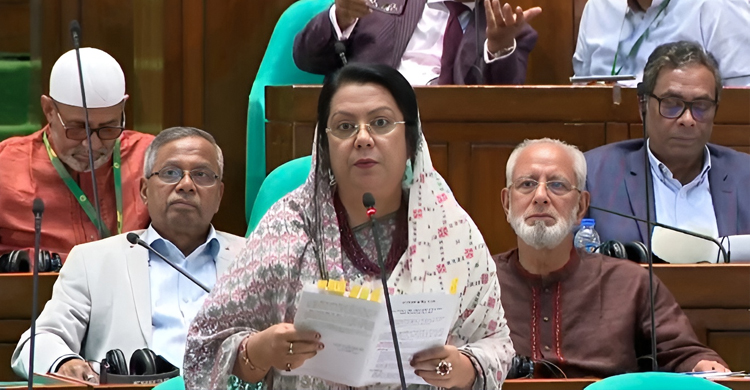
| The government planned to professionalise its journalism sector by establishing minimum educational qualifications for working journalists and creating a centralised online database to verify their credentials, Information and Broadcasting Minister Zahir Uddin Swapon announced in parliament on Sunday.
The minister said the measures were designed to raise professional standards, protect the recognition of legitimate journalists, and clamp down on the growing problem of fake journalism. The Bangladesh Press Council has taken the lead on the initiative, he added, describing it as a necessary response to the challenges of today`s rapidly evolving information landscape.
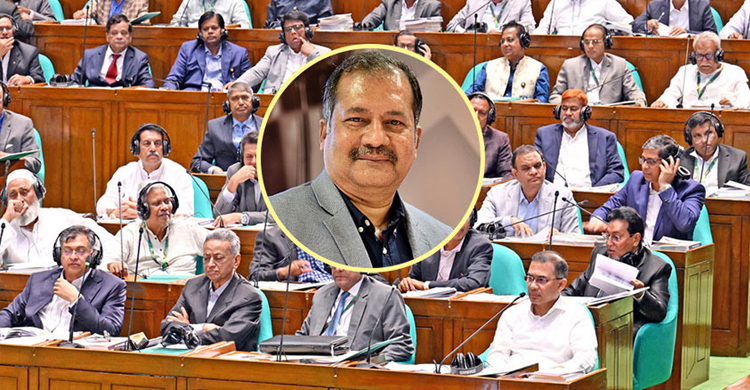
Swapon made the disclosures while responding to questions on the floor of the House, including one tabled by Jamaat-e-Islami lawmaker Abdul Alim from Bagerhat-4.
On the government`s broader effort to counter misinformation and propaganda, the minister said the Ministry of Information and Broadcasting had already rolled out a series of action plans. Journalists will receive structured training through the Press Institute of Bangladesh covering artificial intelligence, multimedia journalism, narrative development, and information policy.
Six workshops are currently being held each month, four of them outside Dhaka and two within the capital, with at least one dedicated monthly session for leaders of journalist organisations.
The government has also strengthened its engagement with international media outlets operating in Bangladesh, the minister said, while preparations are underway to hold seminars and discussions involving fact-checking bodies, mainstream media organisations, and other stakeholders to tackle the spread of false information.
The Press Information Department has already distributed 22 photocards and 10 information bulletins focused on rumour prevention to national newspapers and online news portals.
Swapon reminded the House that under the Press Council Act, any individual or organisation that believes a journalist or editor has violated journalistic ethics or public decency may file a formal complaint with the council. Eight such complaints are currently pending, he noted.
The Press Council has also recently conducted training workshops across 32 districts, including Dhaka, targeting journalists from both print and electronic media to curb malpractice and encourage objective reporting.
Responding to a separate question from ruling party member Mohammad Ali Asgar of Khulna-5, the minister said the government was pursuing amendments to the Press Council Act, which dates back to 1974, with the aim of modernising the legislation and transforming the council into a more effective and media-friendly body.
Swapon also outlined the welfare support being channelled through the Bangladesh Journalists Welfare Trust. He said financial assistance has been extended to journalists who are ill, incapacitated, or in financial distress, as well as to the families of deceased journalists. Up to March of the current 2025-26 fiscal year, a total of 1,110 journalists and bereaved families have received such aid.
In addition, scholarships totalling Taka 73.26 lakh have been awarded to 402 children of journalists who demonstrated academic merit. During Ramadan, iftar packages and Eid gifts worth more than Taka 1.2 crore were distributed among 2,000 journalist families across the country.
|