| International Desk: Chinese cinema remained firmly in the international spotlight at the 79th Cannes Film Festival, demonstrating its growing global influence and evolving role in the world film industry despite the absence of Chinese-language films from the festival’s main competition lineup.
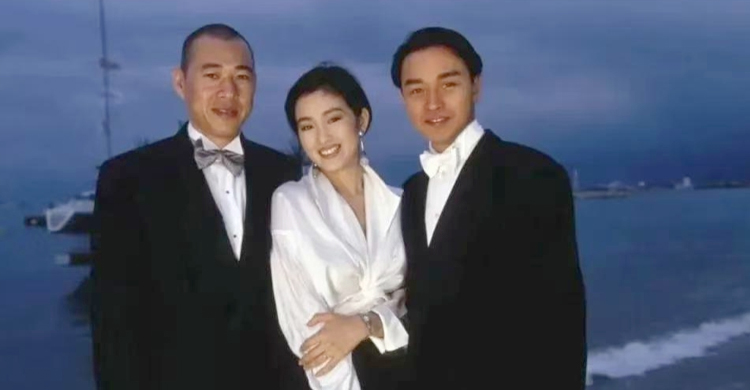
The festival opened on May 12 at the Palais des Festivals in Cannes, France, with renowned Chinese actress Gong Li officially declaring the event open in Chinese. The following day, director Chen Kaige’s acclaimed masterpiece Farewell My Concubine returned to the Croisette with a 4K restored screening in the Cannes Classics section, drawing a packed audience and underscoring the film’s enduring international appeal.
Although no Chinese-language films competed for the prestigious Palme d’Or this year, Chinese cinema remained highly visible through film screenings, industry exchanges, co-production initiatives, intellectual property deals, and cultural diplomacy.
French sinologist and Chinese cinema expert Luisa Prudentino noted that the return of Farewell My Concubine and Gong Li to Cannes reflects the lasting significance of Chinese cinema on the global stage. The film remains the only Chinese-language production to have won the Palme d’Or and continues to serve as a cultural bridge between China and France.
Today, China has become one of the world`s most important film markets and has developed a distinctive and increasingly influential cinematic ecosystem. The works of renowned directors such as Zhang Yimou, Chen Kaige, and Jia Zhangke have long maintained a presence at major international film festivals, while newer productions continue to gain recognition across diverse genres.
During this year’s festival, the China Film Joint Exhibition Booth, organized under the guidance of the China National Film Administration, featured 185 Chinese films and 70 film and television enterprises. The showcase presented a wide range of productions—from martial arts epics and science-fiction adventures to contemporary dramas—highlighting the depth and diversity of China’s creative industries.
One notable entry was Dear You, which was screened at the Cannes Film Market on May 15. Based on the history of overseas Chinese migration in Southeast Asia, the film resonated strongly with international audiences and attracted the attention of foreign distributors. French film distributor Boris Piney praised the film’s emotional depth and cross-cultural appeal, noting that its themes of family history and identity transcend national boundaries.
Industry observers believe the growing international presence of Chinese films reflects both the diversity of China’s domestic market and the country’s evolving global image. Increasingly, Chinese productions are moving beyond simple overseas distribution and into the export of intellectual property, storytelling frameworks, and creative concepts.
A significant milestone was achieved when French production company Master Movies signed an agreement with Jiangsu Taike Film and Television Co., Ltd. to acquire the French adaptation rights to the Chinese film Johnny Keep Walking. Industry experts described the deal as an important example of Chinese storytelling gaining recognition within international production systems.
Master Movies General Manager Lola Pacioni said China`s film and audiovisual sectors offer enormous opportunities and possess strong cross-cultural potential. She emphasized the company`s commitment to expanding cooperation with Asian partners and exploring new collaborative projects.
According to Yang Gang, head of Jiangsu Taike Film and Television, the acquisition demonstrates that Chinese screenwriters and original stories are increasingly earning recognition from global film industries, further expanding the international influence of Chinese narratives.
The 79th Cannes Film Festival ran from May 12 to May 23, featuring screenings, forums, and industry events that brought together filmmakers, producers, investors, and technology innovators from around the world.
Beyond Cannes, Chinese cinema continued to strengthen its presence in France through the 11th Chinese Film Festival in France, which showcased 17 films across categories including new releases, classic films, and documentaries. Since its launch in 2011, the festival has screened more than 100 Chinese films and attracted over 250,000 viewers.
Film cooperation between China and France has also gained new momentum. During French President Emmanuel Macron’s visit to China last December, the French National Centre for Cinema and the China National Film Administration signed a cooperation memorandum, opening a new chapter in bilateral collaboration in the film sector.
Another major theme at this year’s Cannes festival was the growing impact of artificial intelligence (AI) on filmmaking. The "AI and Talent Summit" brought together industry leaders to discuss how AI is reshaping creative processes, production models, content development, marketing, and distribution.
Experts noted that AI is no longer merely a future concept for the audiovisual industry but has become an integral component of modern filmmaking. While the technology offers significant gains in efficiency and innovation, it also raises important questions about creative ethics, regulation, and talent development.
Qin Chenkui, Deputy Director of the China Film Administration, said the Chinese film industry is actively embracing technological transformation while maintaining a people-centered approach. He stressed that AI should serve as a tool to reduce production burdens and enhance creativity, enabling filmmakers to focus more on storytelling, artistic expression, and emotional depth.
As Chinese cinema expands its global footprint through artistic excellence, cultural exchange, technological innovation, and international partnerships, its presence at Cannes demonstrates that influence in world cinema extends far beyond competition trophies alone.
Source: Lili and Alim, China Media Group (CMG).
|