| (BSS)- Prime Minister`s wife and Vice President of the Ziaur Rahman Foundation Dr Zubaida Rahman today stressed the need for making quality healthcare accessible to every citizen of Bangladesh irrespective of income, location or social status, saying health is not a privilege but a basic human right.
Sophisticated hospitals or procurement of advanced apparatus should not be considered the sole measure of the level of healthcare, she said
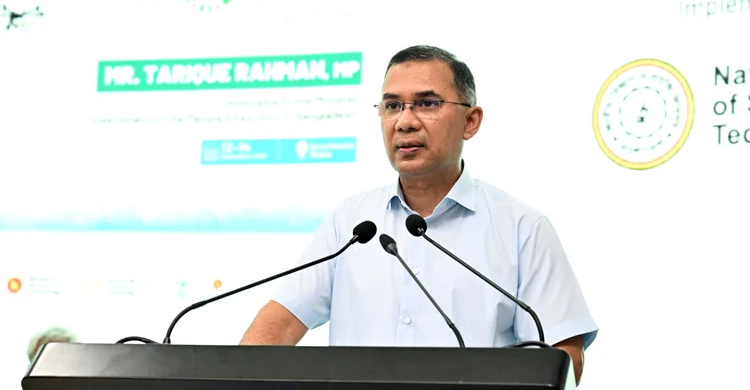
Dr Zubaida said this while speaking in a plenary discussion titled- Helath Innovation for All: Expanding Access to Affordable and Inclusive Care at Bangladesh Innovation Fair 2026 at plenary hall of Novotheatre in the city.
The fair is being held under the auspices of Ministry of Sciences and Technology.
Dr Zubaida said, many people come specialist hospitals only after their conditions become complicated. Patients travel long distances to take necessary service as such service is not available close to home.
She said modern tertiary healthcare has also become extremely expensive, though it’s not the problem of Bangladesh alone. Many advanced countries are facing such problems, she added.
Dr Zubaida said, “We often say that prevention is better than cure. It’s true, but healthcare system must diagnose the disease and its risks before they become severe.”
She said that healthcare should be made accessible to the remotest villages so that every citizen can receive healthcare.
Patients suffering from dengue should not need to travel long distances for treatment. Parents with children suffering from measles should have access to healthcare closer to their homes, she noted.
She also stressed that all screening programs must connect patients to a confirmatory diagnosis, counseling, treatment, medication, monitoring, and referrals.
“Bangladesh can also begin preparing for the health needs of an aging society, including dementia, Parkinsons disease and other diseases affecting geriatric populations,” she said.
Dr Zubaida said the health vision should be based on a clear principle that quality healthcare should not be a privilege determined by income, location or social status. It should be accessible to every citizen in every part of Bangladesh.
She said the vision should includes strengthening primary healthcare, bringing care closer to home, expanding preventive programs, developing the health force and gradually increasing public investment in health toward five percent of the GDP.
The planned recruitment of 100,000 health workers particularly would give an opportunity for women to create foundation for this transformation, she hoped.
She added that these health workers can support screening, maternal and child health, health education, chronic disease management and referrals within communities.
Zubaida Rahman also stressed the need for referrals to move patients smoothly from community and primary care to district and specialist hospitals, while information should return to the primary care team so that patients are not lost after treatment.
Bangladesh also needs a nationally coordinated system covering voluntary blood donation, safe collection, infectious disease screening, component step separation, storage, transportation and complete traceability from donor to patient, she said.
Dr Zubaida said innovation will be central to all these efforts, but innovation does not always mean inventing an expensive machine or launching another application.
“The most valuable innovation is the one that solves a real problem for patients,” she noted.
She said Bangladesh has many such institutions needed to make this possible, including respected researchers, a strong pharmaceutical base, experienced clinicians, expanding digital capability, community-level organizations and an energetic generation of entrepreneurs.
“Research can connect with validation, validation can connect with regulation, regulation can connect with responsible procurement, and innovation must connect with service delivery,” she added.
She further said, “Every part of the system must remain connected to the needs and rights of the patient. Only then we can provide healthcare as a basic human right to every citizen of the country.”
State Minister for Health and Family Welfare Dr. M A Muhit attended the programme as special guest. Prime Minister’s Special Assistant for Health Dr. S M Ziauddin Haider moderated the event while Prof AK Azad Khan gave a keynote speech.
In the panel discussion, Director General (DG) of Drug Administration (DGDA) Alamgir Hossain, Senior vice-president of the Bangladesh Association of Pharmaceutical Industries (BAPI) M Mosaddek Hossain, Deputy Executive Director of TMSS Dr Motiur Rahman, Director of Drug Administration Dr Akter Hossain, Director of Medical Services at United Healthcare Services Limited Dr Azharul Islam Khan, and CEO of EskeGen Ltd Dr Sadaf Sazz Siddiqi took part.
|